
How We See Kitchens Evolving
After almost 20 years of dominance, Millennial minimalism’s grip on interior design is finally loosening. As we mentioned in a blog article two years ago, we’re seeing an accelerating shift away from sterile designs toward a warmer, more structured approach. How does that play out for 2027, and where do we see kitchen design going in the next few years? If two words encapsulate what we see coming, they are Function and Feeling. Read on.
The NKBA 2027 Kitchen Trends Report highlights ten core themes driving kitchen design:
The Great Rebalancing of Space
The Purpose-Built Kitchen
Humanized & Layered Design
The Emotional Kitchen
Intentional Simplicity
The Connected Home Experience
Optimizing the Interior Environment
Weathering the Unexpected
Redefining Value
The ROI Kitchen
These ten points boil down to a handful of core trends. Let’s look at each one.


The hidden kitchen
Fully open plans are dead
It turns out not many people actually like being on display while they’re cooking. People also like clear delineation of tasks and spaces. They don’t want kitchen work invading their living rooms and then the entirety of their lives, and they don’t want the visual clutter of their kitchen in constant view. In a survey, 81% of design professionals said they believe intentional zoning is here to stay. This year, we anticipate more full and half walls, kitchens that blend more seamlessly with the home beyond, and other design elements that obscure or camouflage the kitchen area.
Hidden appliances have arrived
A place for everything and everything in its place. We have seen a tremendous uptick in the demand for hidden appliances. Whether it’s panel-fronted large appliances, dedicated appliance garages, microwave drawers, or appliance lifts, people are seeking out cleaner, more organized countertops. We’re excited about clever options coming to market this year and expect consumer demand to grow.


Back kitchens are back
Sometimes known as a scullery, messy kitchen, or prep kitchen, back kitchens are a rising design trend that splits the kitchen into two distinct areas: a pristine, guest-facing “show kitchen” and a working kitchen hidden behind a wall, sometimes with a hidden door that looks like a section of cabinets. This isn’t a new idea. In fact, the concept goes back to ancient Roman culinas, which kept cooking heat and activity away from guests. Contemporary back kitchens serve the same purpose, keeping the heavy-duty kitchen work away from the main kitchen, which has become an additional entertaining area in modern homes. We anticipate seeing more of these types of spaces in the new year.
Open shelving has left the room.
Open shelving, once one of the hottest trends in kitchen design, has lately taken a back seat. Inspired by chefs' working kitchens, Martha Stewart first championed open shelving in her seminal 1982 lifestyle book Entertaining. Open shelving really hit the mainstream in the 2010s, following the rise of popular shows like Fixer Upper, which often featured the concept. However, lately, consumers have begun questioning the actual practicality of open shelving systems because they invite visible clutter and foster dust and grease buildup. For 2027, we’re seeing shorter, more intentional runs of open shelving that tie seamlessly into the millwork, such as around windows to let in more light.
Integrated lighting over visible fixtures
Some of the past generations really seemed to prefer 40w bulbs and dimmer living areas. This doesn’t need to be the case anymore. Advances in technology and rapidly falling LED lighting costs have driven a surge in demand for integrated lighting. We can now put lights pretty much anywhere that a customer wants, either concealing them or making them a seamless visible design feature. We’ve seen cabinet lighting move from a supplemental feature to a stunning shadow-eliminating illumination system. Regardless, we have found that the new integrated lighting is one of the hottest trends for 2027, and we don’t see demand slowing anytime soon.
Organic warmth
Natural wood finishes on traditional materials
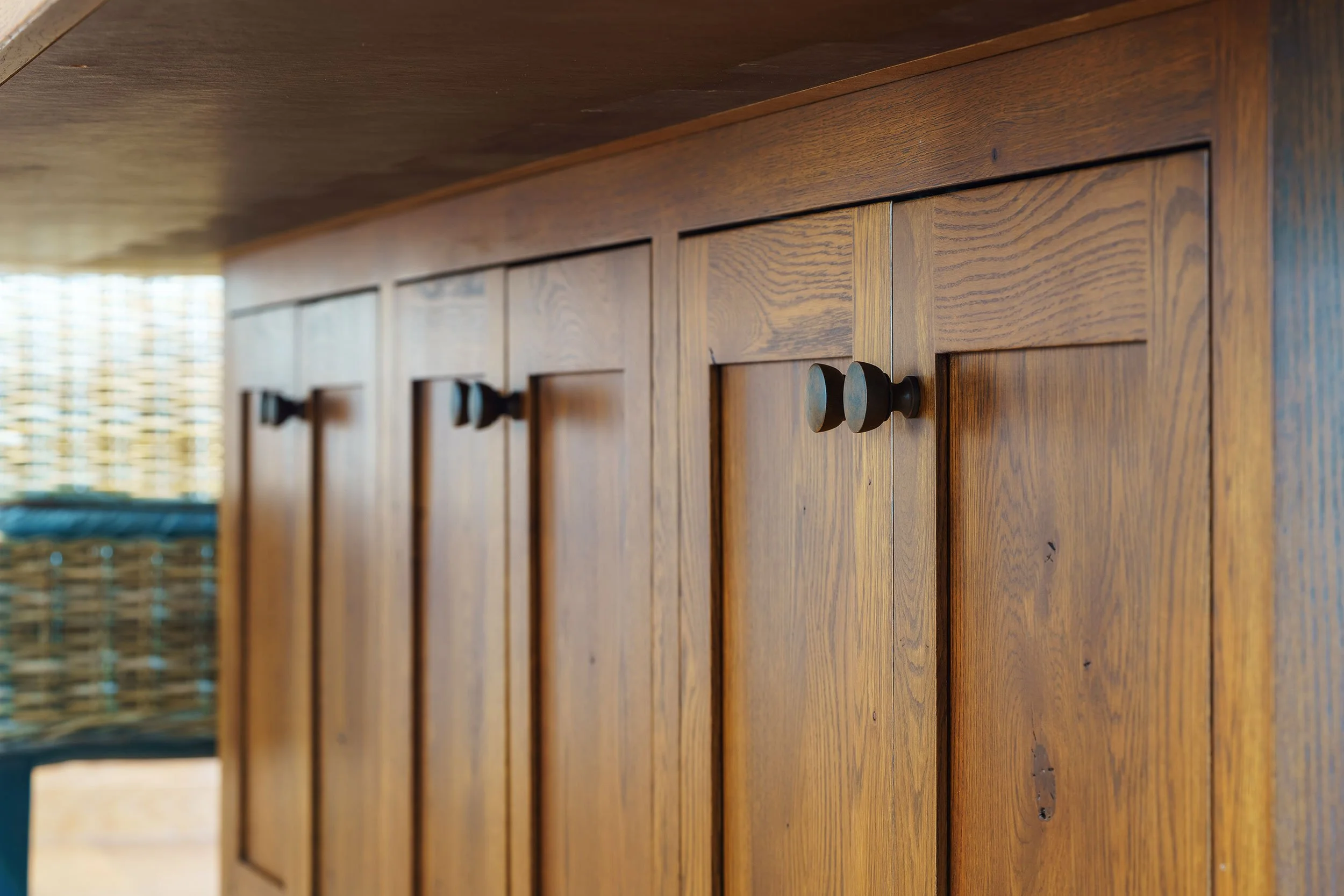
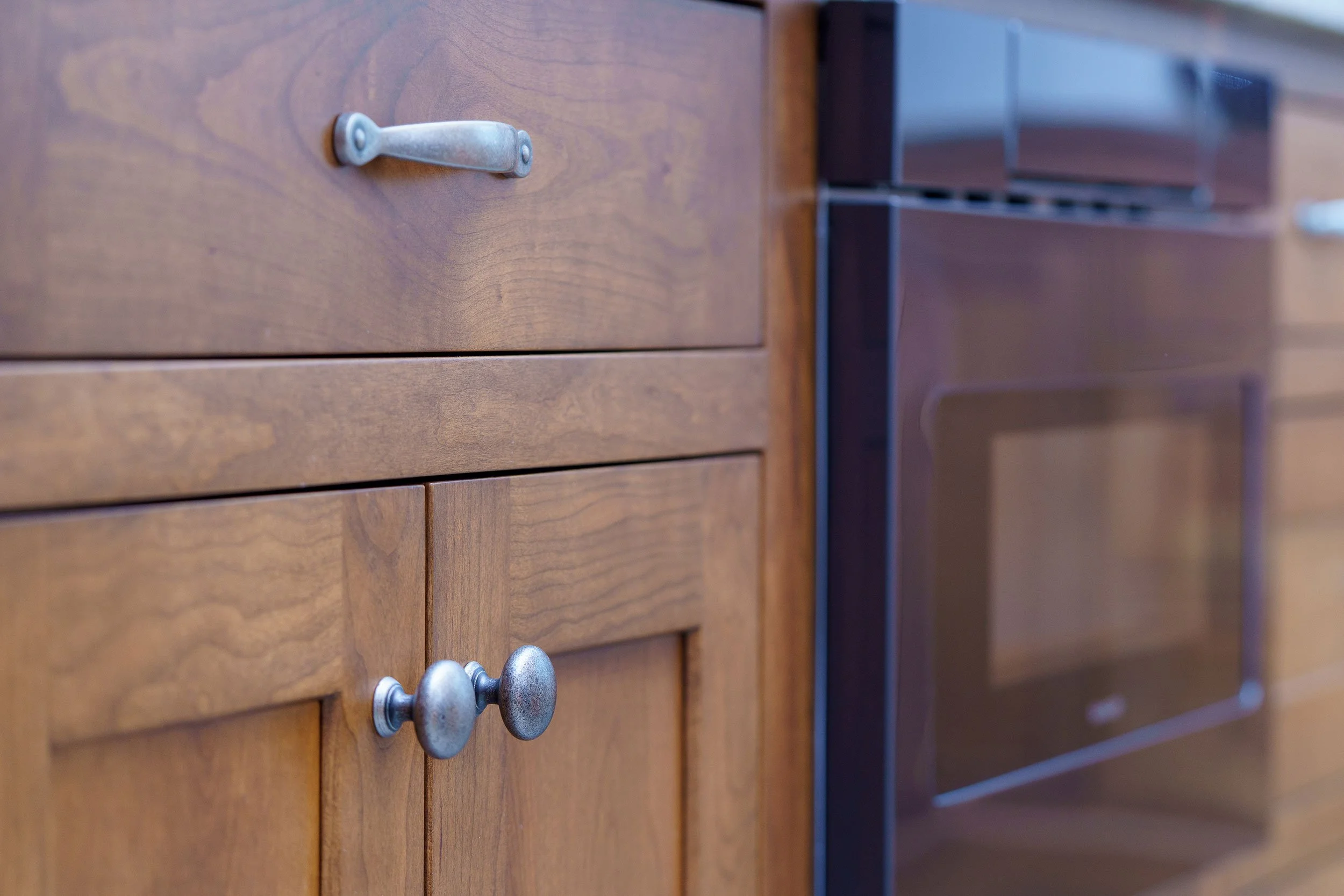
“Stained cabinets” doesn’t mean what it once did. Gone are the oversaturated honey oak and cherry fruit stains of the 80s and 90s. Lately, we’ve seen a rise in more muted natural wood stain colors that let rich woodgrains and natural wood surfaces take center stage. Other wood species have been popping up on our radar, too. White oak is strong, and we have been doing some beautiful work in Walnut recently.
Warm neutral paint colors
As the NKBA report notes, we’re seeing fewer whites and grays in kitchen finishes, with a move toward grounded, warm colors. Since they can function as a neutral, earthy greens are becoming popular. Deeper jewel tones, such as moody blues, are key for statement pieces like islands or accent walls. For 2027, shiny gold hardware is waning a little in popularity. It is being replaced by softer colors and finishes that allow for a richer, more lived-in feel.
Heritage maximalism is getting its toe in the door
Recently, heritage maximalism is beginning to edge out stark minimalism in kitchen design. Inset doors that reveal the cabinet's face frame and showcase the joinery are very popular. We’ve also seen a move toward classical cabinet design elements, such as furniture-style base details from 1920s farmhouse style and the use of moldings and symmetry from Colonial and Greek Revival architecture. All of this provides the architectural structure needed to anchor the space.


Tailored Function
Dedicated beverage areas
There seems to be a never-ending stream of home beverage preparation and storage options on the market, and many people are preparing beverages for themselves and guests rather than going out. Features such as coffee stations, full wet bars or even soda fountains keep people out of the primary cooking triangle and concentrate drink-prep messes in one place for easier cleanup. We anticipate an ever-increasing demand for these features in kitchen projects in 2027.
Smart design trumps big kitchens
For many years, bigger was better, especially with islands, and people sacrificed precious square footage in their homes for their kitchen design. In the last few years, smart kitchen design has changed kitchen sizes, proving that good design has always been about function. Tight work zones and activity-based storage have made kitchen spaces more efficient and more visually calm, eliminating the need for sheer size to impress. This year, we’re excited about building spaces that fit the people who are using them, rather than just being impressively large.
Utility is prioritized over gimmicks
A silent epidemic that plagues modern life is feature bloat. Many things we use have so many features, we hardly know what to do. For 2027, we’re seeing consumers focusing less on gimmicks and more on utility. Demand is surging for better organization, with drawer and cabinet inserts and other innovative storage and functionality solutions taking center stage. One extremely popular item is the docking drawer, which keeps all your electronic devices organized and charged while keeping the associated clutter out of sight.

Whole home design
An integrated planning approach
Historically, homes have been designed largely as a series of connected boxes, with little thought given to traffic paths. Recently, we’ve seen a move toward whole-home design, with much more consideration given to spatial flow and use patterns. Since the kitchen is one of the most-trafficked areas of the home, considering use and flow is important. We’re also seeing transitional storage being integrated to smooth the transition from living areas to the kitchen.
Mudroom and laundry spaces tied to the kitchen
We are familiar with the term “back of house” in the hospitality industry for all of the working areas that you don’t see. We are seeing a trend toward building the kitchen, laundry, and mudroom into an integrated service spine of the home, with each space designed as a seamless unit that works together. Sometimes we see a continuity in the cabinetry and millwork from room to room, with similar finishes, profiles, or design elements.
In conclusion, we can’t wait to see what 2027 brings to the table. People are allowing more of their personality to show through in their kitchen designs than in the recent past, which is exciting. Technology continues to evolve at a rapid pace, and it will be interesting to see where things end up. What is your favorite trend of 2027? What trends did we miss? What trends do you see coming? We’d love to hear from you!