
A CNC Close Call
Dull tooling leads to more adventure than we bargained for
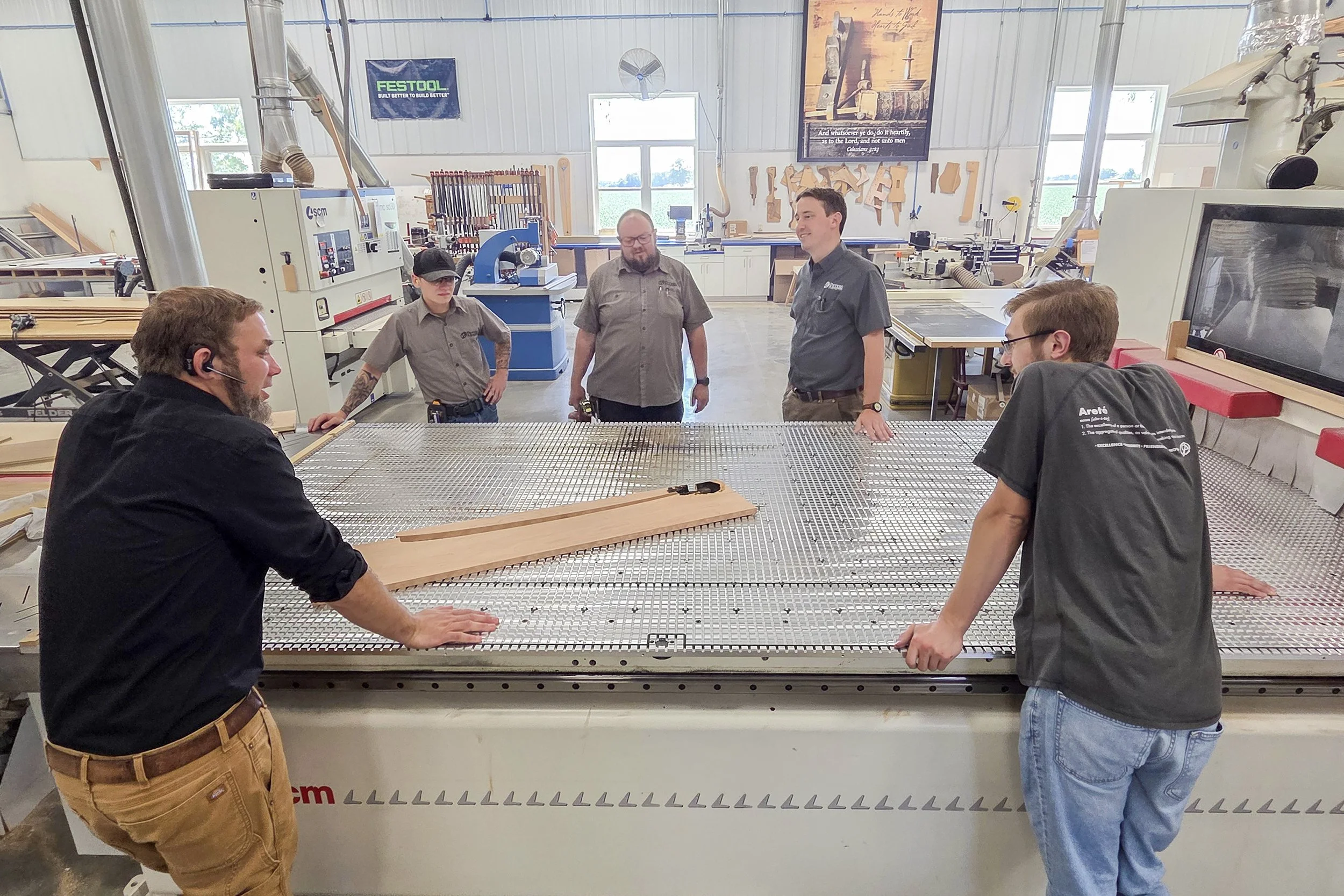
Fire is a specter that haunts all of us who operate a woodshop. Most of the materials we work with are flammable, so fire safety is a top priority. Recently, we had a close call with a workpiece on our CNC router. Here’s what happened.
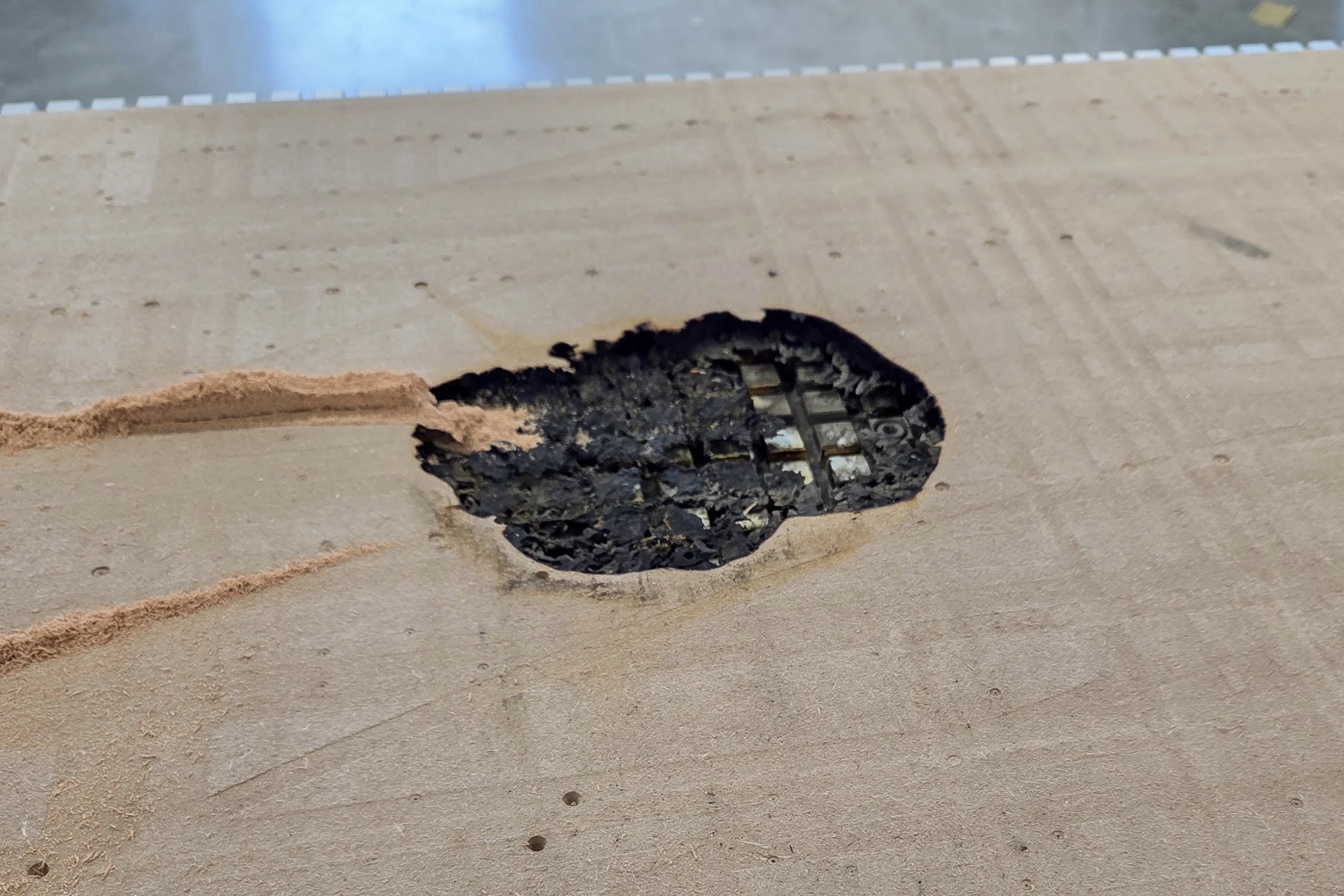
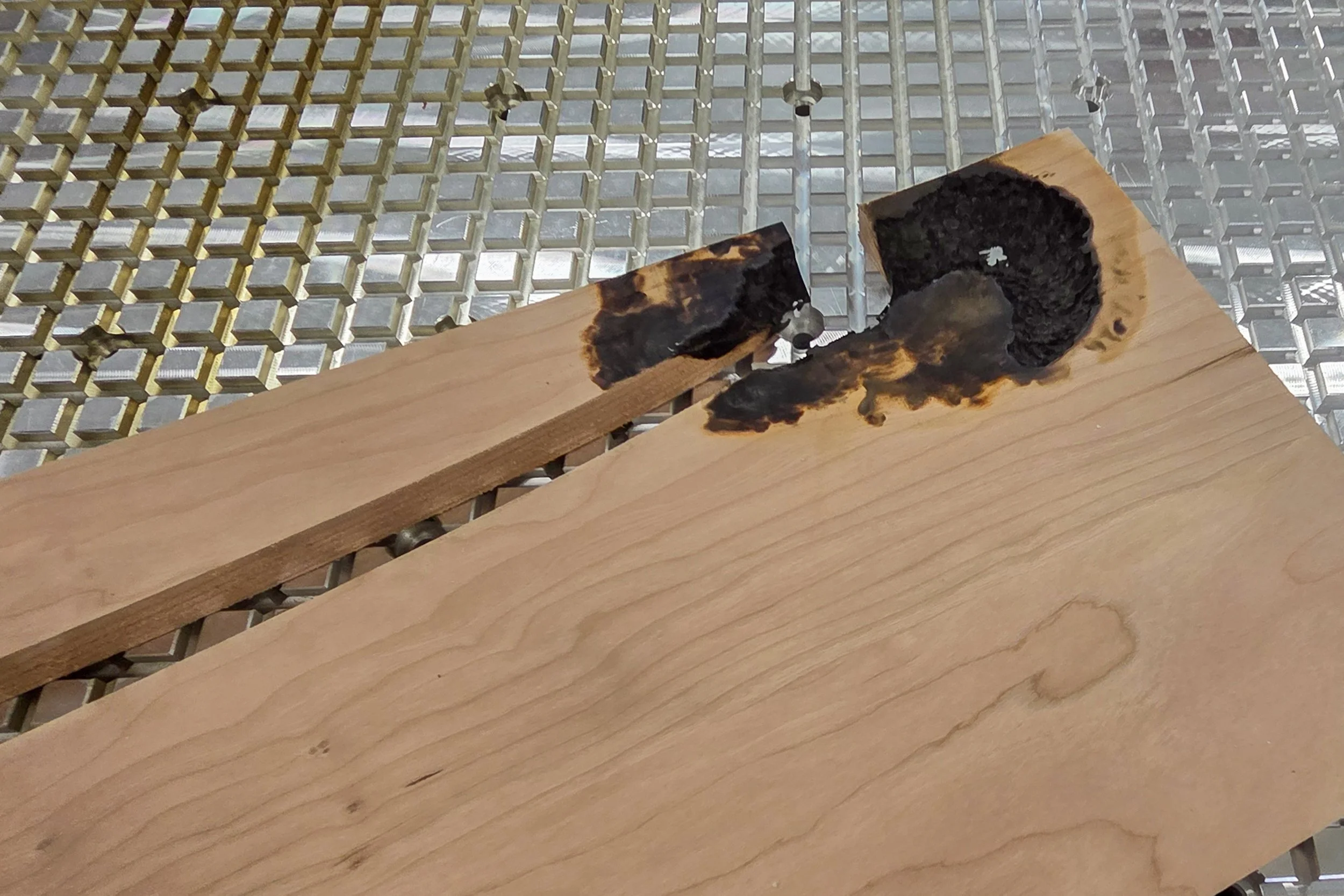
One of our CNC operators was cutting a piece when he stepped away to discuss project details with the engineer and didn't shut the machine down before leaving. On a normal day, this wouldn’t necessarily be an issue because the machine really is designed to run itself. However, on this day, no one noticed that there was a dull tool in the machine. The program called for an improper tool feed and speed for how dull the tool was, and we were taking too large a cut at too high a speed. The increased friction from the dull bit was enough to cause the chips to start to smolder. The airflow caused by the vacuum bed pump fed air to the embers, feeding the fire.
We smelled smoke in the shop and initially assumed it was coming from someone’s BBQ or outdoor burning. When we shut the shop door, we realized the smoke was coming from inside the shop, so we quickly isolated it and put it out. Fortunately, no one was hurt, and the burned workpiece was minor and easy to replace.
Looking back, several things stood out.
Keep your tooling sharp
I know it goes without saying, but always keep your tooling sharp. Programs are designed for sharp tooling. Dull tooling increases friction, which in turn increases the chance of a fire. In our instance, the dull bit was still in the machine, and no one noticed. If the operator had been present, they likely would have caught the smolder right away.
Never leave a running machine unattended
Although the fire was caused by an improperly programmed feed and speed, it would not have been an issue if the operator had followed our SOP and stayed with the machine while it was running. Operator presence is the number one way to catch and stop issues at the machine. If no one is there, no one may know something is wrong until it is too late.
Double-check your feeds and speeds
Double-checking feeds and speeds is another good way to stop a problem before it starts. Accidentally entering a speed that is 10x too slow by missing a digit is an incredibly easy thing to do.
Know how to access the fire
Shutting off the machine may seem like the absolute first order of business, but if you can’t see the fire, make sure the cutting head or any sort of dust hood or safety shielding is moved up and out of the way so that you can access the fire in order to put it out.
Turn off anything that is feeding the fire
The vacuum table's downdraft can fan the flames in a very real way. Friction started the fire, but the vacuum worsens it. Turn off the vacuum pump and dust collection immediately to cut off the accelerated air supply and stop feeding oxygen to the flames. Then hit the e-stop to stop the tool and cut power from the machine.
Use the appropriate fire extinguisher for the situation: use a dry chemical or CO2 fire extinguisher to extinguish the fire.
Hopefully, a router fire never happens to you, but mistakes are part of working with machines, and the best time to prepare for an emergency is before one happens.